Posts

Showing posts from March, 2024

How PARPi really works

Image
Transcription–replication conflicts underlie sensitivity to PARP inhibitors https://www.nature.com/articles/s41586-024-07217-2 It is interesting to note that treatment of disease may become commonplace without any real understanding of how it works . One such example is the use of PARP inhibitors for the treatment of ovarian cancer due to defective DNA repair, which includes about 80% of all  ovarian cancer. Previously, through a mechanism known as synthetic lethality, it was thought that  PARPi  worked by trapping the  PARP  enzyme on the chromosome and  preventing its repair activity.  This basic research using yeast cells has  demonstrated  that the effect  of  PARPi  is to alter proteins essential for DNA repair. These proteins  have  the memorable names of TIMELESS and TIPIN.  Understanding of the true reason for  PARPi  effectiveness will enable further drug development  and also  explai...
Better use for MRI

Image
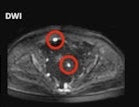
What makes small ovarian lesions light up like a lightbulb? https://tinyurl.com/mrv6nc6b Survival for patients with ovarian cancer is mostly  determined  by the complete removal of the primary tumour at the time of the  initi al  surgery. For this to occur the extent of disease needs to be  determined  as effectively as possible. This study advocates the use of diffusion weighted MRI  (DWI),  to show small metastases close to bo wel loops .  DWI plots the distribution of hydrogen  atoms and   measures the change in motion of these when captured in a metastasis. Using DWI ,  after proper bowel preparation to overcome signal artefact ,  has been sho wn to clearly lesions measuring 4mm.  o r more . Using the imaging it is possible to assess the likelihood of complete clearance with an accuracy of 90%.

Using the Biobank

Image
Sarcopenia-related Traits, Body Mass Index and Ovarian Cancer Risk: Investigation of Causal Relationships Through Multivariable Mendelian Randomization Analyses https://tinyurl.com/bddp8hnk One of the more  important changes  to medical research has been the  start  of the  UK Biobank. Established in 2015 and now with over 500,000 participants, these volunteers have provided genetic information  with full genotyping and general information about health and well-being. On-going data entry   is available showing the course of disease in this large group. This study correlates the development of ovarian cancer with BMI and streng th testing together with genetic risk.  Obviously with the incidence of ovarian cancer  being 7 /100,000 each year ,  the numbers are still small. However, the early results show that the most significant strength test is the walking speed, (the faster the better), and that  BMI in the overweight range is...

Why stress is bad

Image
Chronic stress increases metastasis via neutrophil-mediated changes to the microenvironment https://tinyurl.com/mrx83sht Stress is a known contributor to shorter survival after cancer treatment. Reasons for this have been unclear. Now, re cent research using a mouse model has  identified  a  possible  mechanism  by which this occurs. All cancer patients face increased stress either through anxiety about outcomes or associated  problems ,  such  as loss of income and mobility. This stress  activates the hypothalamic-pituitary-adrenal pathway with consequent increase i n  circ ulating steroid hormones. An elevated neutrophil/lymphocyte ratio in circulating blood   plasma is one of the ph y siological effects of stress. The neut r ophils   normally  act to form traps for  extracellular pathogens such as bacteria. A similar process will trap c ancer cells, with implantation at remote sites and consequent metastasis. Knowi...

Dementia and Cancer

Image
Exploring the association between cancer and cognitive impairment in the Australian Imaging Biomarkers and Lifestyle (AIBL) study http://tinyurl.com/3n99bfnf Previous  anecdotal experience has suggested that cancer may be protective against cognitive impairment , with a lower incidence of dementia.  Similarly,  patients who have been  diagnosed with Alzheimer’s (AD) have  a  lower incidence of cancer.  This Australian study uses  information from the Australian Imaging Biomarkers and Lifestyle study, (AIBL) , which  is an on-going measurement of the development of cognitive impairment. As part of the standard data set, those members of the study who developed cancer were compared to the others. Even when allowing for the  small numbers  (546); being about one quarter of the total  AIBL   participants,   there is a definite trend, with less AD  in the cancer group . The incidence  of mild cognitive decline is...